Hello!
Have you ever walked into your home and thought, Why does this space feel so… off?
Nothing is necessarily wrong. The furniture is mostly new. The room is clean. You’ve decorated it. And yet, something about the space doesn’t feel good.
It might be that you’re constantly walking around the same chair. Maybe you have to open three different cabinets just to make one cup of coffee. Or maybe you walk into a room and immediately feel overwhelmed because there is just too much going on. I call these energy drains.
One of the things I love most about holistic design is that it asks us to look beyond, “Does this room look good?” and instead asks “How does this room make me feel and does it support how I live?
Our homes are communicating with us all day long and sometimes, without realizing it, they’re making life harder than it needs to be. So this month, I’m sharing the three most common home energy drains that I see and how to fix them.
Sending lots of ,
1. Your Home Layout Is Fighting the Way You Live
Let’s start with one of the most obvious, but often overlooked energy drains: poor flow.
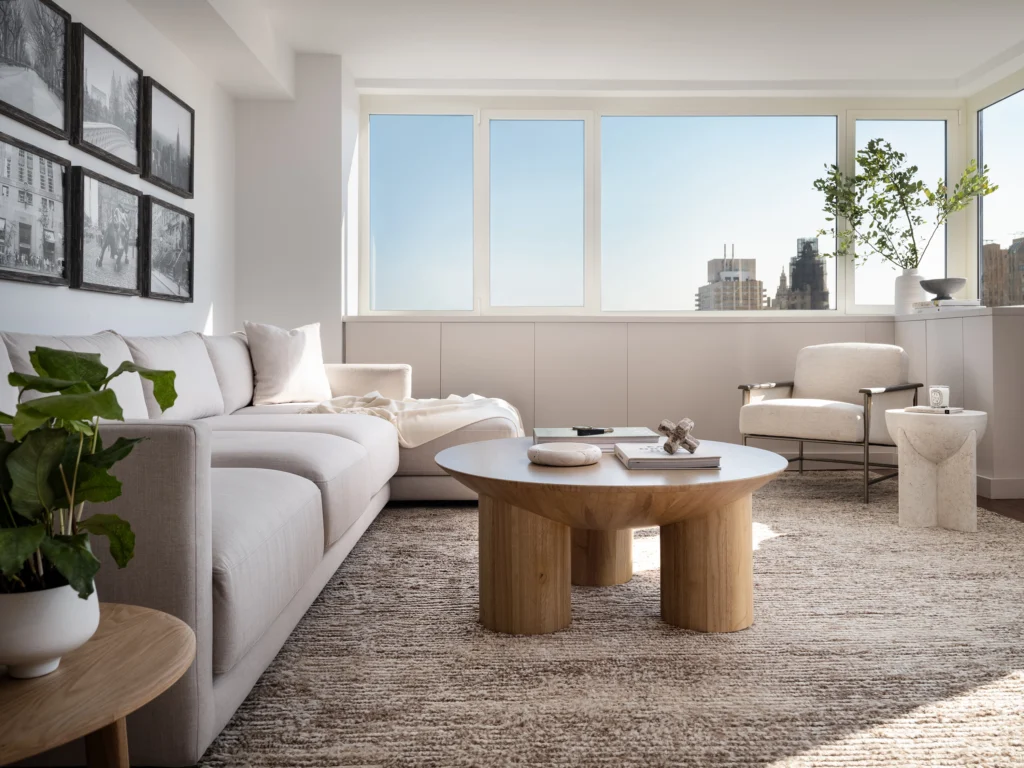
You know that feeling when you’re walking through your home and you have to do a little dance around a piece of furniture? Or you’re constantly bumping into the corner of a table? Or you have to squeeze between the sofa and the coffee table every time you want to sit down? Your body notices.
We tend to think about furniture placement from a purely visual perspective: Does this look balanced? Does the sofa look good here? Does everything fit?
But holistic design asks another question: Does this layout support the way you move?
Pay attention to your natural pathways. Where do you walk when you come home? Where do you drop your bag? How do you move from the kitchen to the dining room? Where does everyone naturally gather? If you find yourself constantly walking around your furniture instead of moving through the room, that’s a clue.
Try moving one piece, even just a few inches, and see what happens, Sometimes the biggest transformation isn’t a new sofa or a complete redesign. It’s giving your body a little more room to move.
2. The Things You Use Every Day Are Too Hard to Reach
This one is SO common and is actually one of the easiest energy drains to fix.
Think about your morning coffee routine. You’re half awake. You walk into the kitchen, open one cabinet for a mug. Then another cabinet for the coffee. You pull out the coffee maker from another spot across the room and only then, finally have all of the items you need after a mini treasure hunt.
It sounds ridiculous, but these tiny moments of friction happen all day long. The blender you use every morning is all the way at the back of the cabinet. The serving platter that you use every weekend is on the very top shelf and you need a step stool to reach it.
None of these things are major problems, but collectively, they create a home that asks you to work for your own routines. And you shouldn’t have to do that.
One of the principles of holistic design that I come back to again and again is the idea of designing around your actual life. The goal isn’t perfect organization, it’s creating easy access to the things that you use everyday so that making your coffee in the morning feels like a ritual rather than a chore.
When you remove these tiny barriers, you might be surprised at how much lighter your home starts to feel.
3. Your Home Has Too Much Visual Noise
Finally, let’s talk about something that we don’t always recognize as an energy drain: visual clutter.
I don’t necessarily mean a messy house. You can have a perfectly clean, organized room that still feels incredibly busy. This might be because of too many competing patterns, or too many objects on every surface and open shelving that’s filled to the brim.
When everything is asking for your eye’s attention, your brain doesn’t really get a chance to rest. This is where some of the principles of neuroarchitecture come into play. Our spaces aren’t just things we look at, they influence how we think, feel and move throughout our day.
So what can you do? Create visual quiet. Give your favorite pieces a little breathing room. Group smaller objects together. Clear surfaces of everything that you don’t immediately need at arms length.
This doesn’t mean throw everything away, it means being intentional about what is visible, and understanding what deserves visual attention and what doesn’t. It’s giving your eye somewhere peaceful to land, and giving it areas to rest.
The Holistic Home: Less Friction, More Flow
Here’s the thing I want you to remember: your home is either supporting you, or it isn’t. It’s making your life easier, or creating tiny obstacles. It’s helping your nervous system settle, or constantly asking for your attention.
You don’t need a major redesign to fix that. Start simple.
Give yourself five minutes to walk around your home. Notice what feels good. Notice what feels annoying. Notice what feels like work. That’s your home talking to you. And once you start listening, you’ll be amazed at what your space can tell you about what needs to change.
Ultimately, the goal of holistic interior design isn’t just about creating a beautiful home, i’s about creating spaces that support the life your living, and that give you more energy to live it.
Interested in creating a supportive, calm environment in your own home? Explore our holistic interior design services or read our guide on how neutrals create sanctuary in modern spaces.