The Neuroarchitecture Checklist: How to Audit Your Space for Mental Wellness
Hello!
This month I’m diving into neuroarchitecture.
If neuroaesthetics is the study of how we feel about beauty, neuroarchitecture is the practice of building spaces that talk to us in a healthy way.
And in interior design, this translates to moving away from what looks trendy and toward what actually has been proven to help the human brain thrive.
Read on to see how these abstract brain concepts become concrete design choices and let me know if any of these resonate with you!
Sending you lots of 💛,
1. The “Curves vs. Angles” Effect
Take a moment to think about the spaces where you feel most at ease. Chances are, they don’t feel harsh or rigid. They feel soft, inviting, and easy to settle into. This actually has to do with how our brains are evolutionarily wired to scan for danger.
The Science Sharp angles and jagged edges can subtly activate the amygdala (the brain’s fear center), because in nature, these shapes often signal danger (think thorns or cliffs). In contrast, soft, rounded shapes are perceived as safe and approachable.
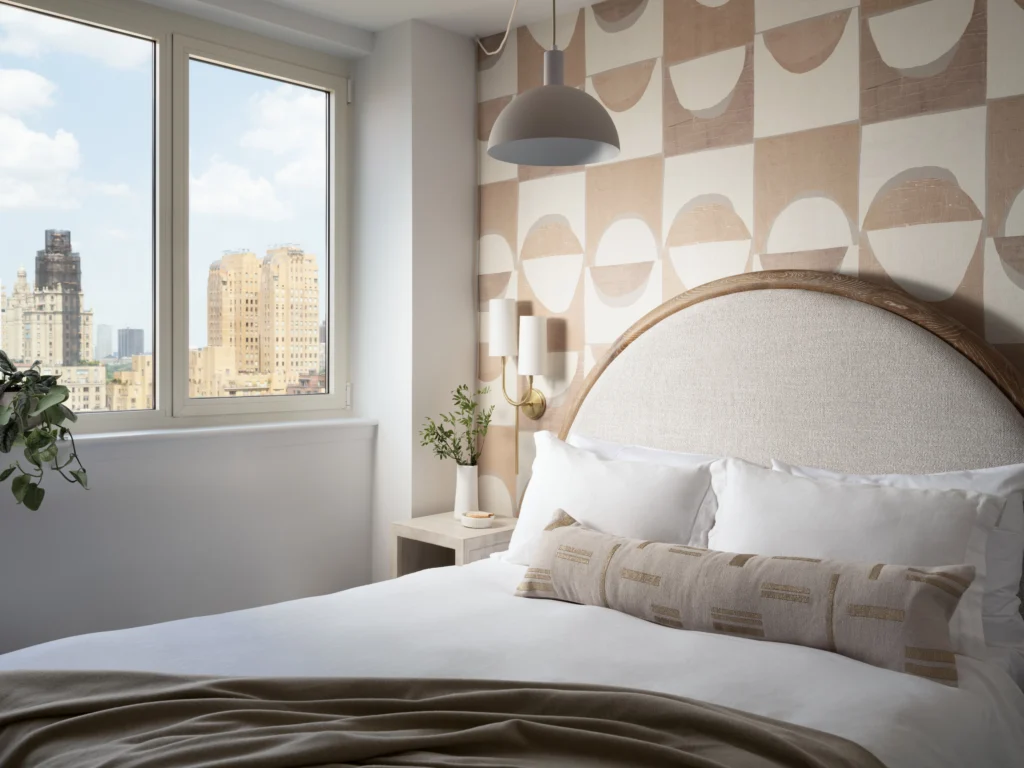
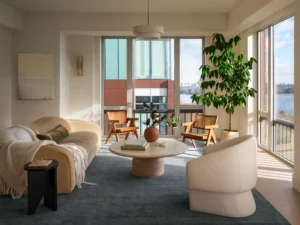
The Design According to neuroarchitecture, incorporating curves, or curvilinear forms, is one of the simplest ways to make a space feel instantly more welcoming. As holistic interior designers, we do this with:
Rounded sofas and armchairs
Arched doorways or mirrors
Circular coffee or dining tables
These elements activate the brain’s pleasure centers, helping to create an environment that feels calm, nurturing, and emotionally “soft.”
Design by Gala Magriñá Design, Photo by Joseph Kramm
2. Ceiling Height and Thinking Styles
Believe it or not, the distance between your head and the ceiling changes how you solve problems. We rarely think about ceiling height consciously, but our brains are constantly responding to it in the background, shaping how we think, create and focus.
The Science Different spatial volumes cue different cognitive modes:
High ceilings encourage abstract, expansive, creative thinking. When we have more vertical space, the brain feels “free” to make broad connections.
Low ceilings promote focus, precision, and detail-oriented work. The sense of enclosure helps the brain “tunnel” into a specific task.
The Design Designing with intention means aligning the room with its purpose:
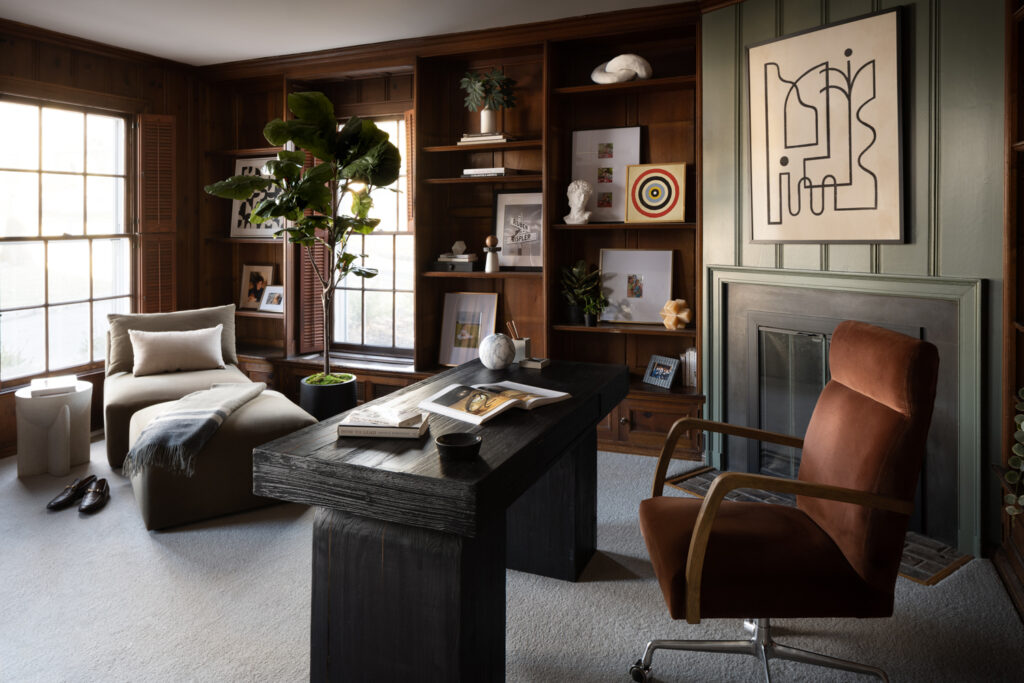
Living rooms, studios, and creative spaces benefit from openness and verticality – meaning high ceilings are best for these spaces.
Reading nooks, offices, and cozy spaces like dens feel more productive when slightly enclosed.
Design by Gala Magriñá Design, Photo by Joseph Kramm
3. “Prospect and Refuge”
There’s a reason certain spots in a home feel instantly comforting: like your favorite corner of the sofa or a tucked-away window seat.
This feeling is rooted in a principle of environmental psychology known as “prospect and refuge.”
The Science Humans evolved as both hunters and prey, which created two deep-seated needs in our DNA:
Prospect: the ability to see what’s ahead.
Refuge: the feeling of being protected from behind.
When both are present, we feel safe and in control.
The Design This prospect and refuge principle is why certain setups feel instinctively “ight or wrong:
Window seats are popular as they give people a view (prospect) while their backs are safely against a seat or wall (refuge).
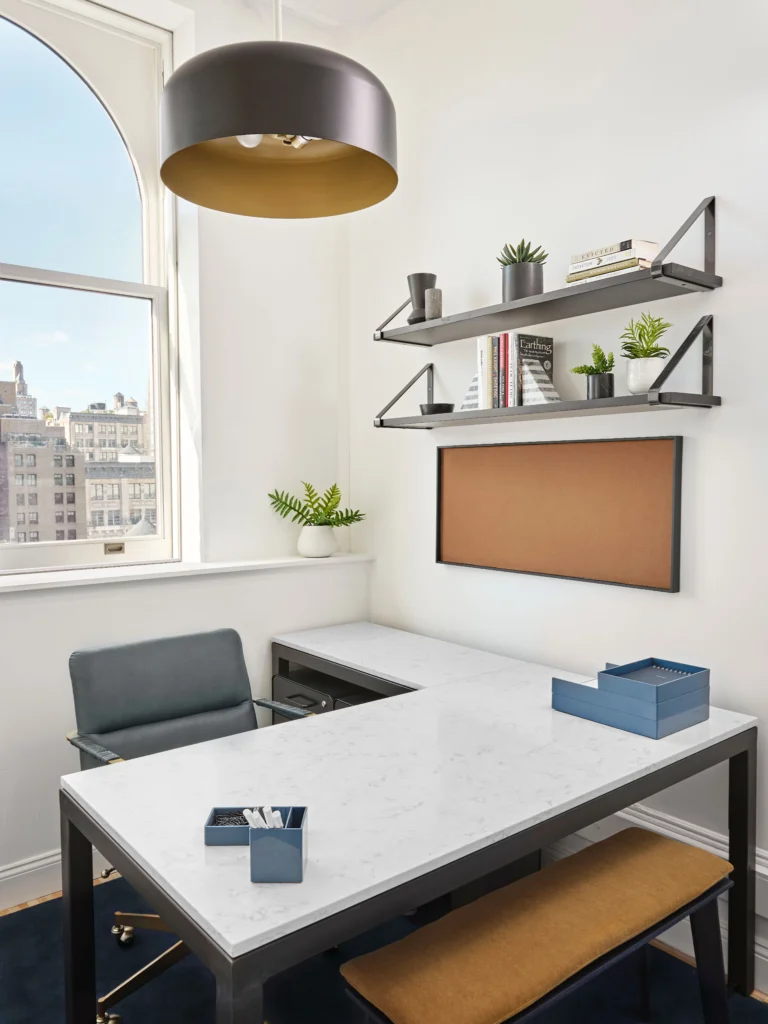
A desk facing a wall with your back to an open door often feels instinctively “unsettling” because it lacks this balance.
As holistic interior designers guided by the teachings of neuroarchitecture, we are always striving to create the balance in the spaces we create.
Design by Gala Magriñá Design, Photo by Claire Esparros
4. Biophilic Design (Nature’s Cheat Code)
Our brains are hard-wired to recognize natural patterns, like the grain of wood or the veins in marble.
This is why we feel more calm outdoors in Nature, or even just in spaces with biophilic elements.
The Science Looking at fractals (complex patterns that repeat, like tree branches or snowflakes) helps to reduce stress and restore mental energy. Studies show that exposure to these patterns can lower cortisol levels up to 60%.
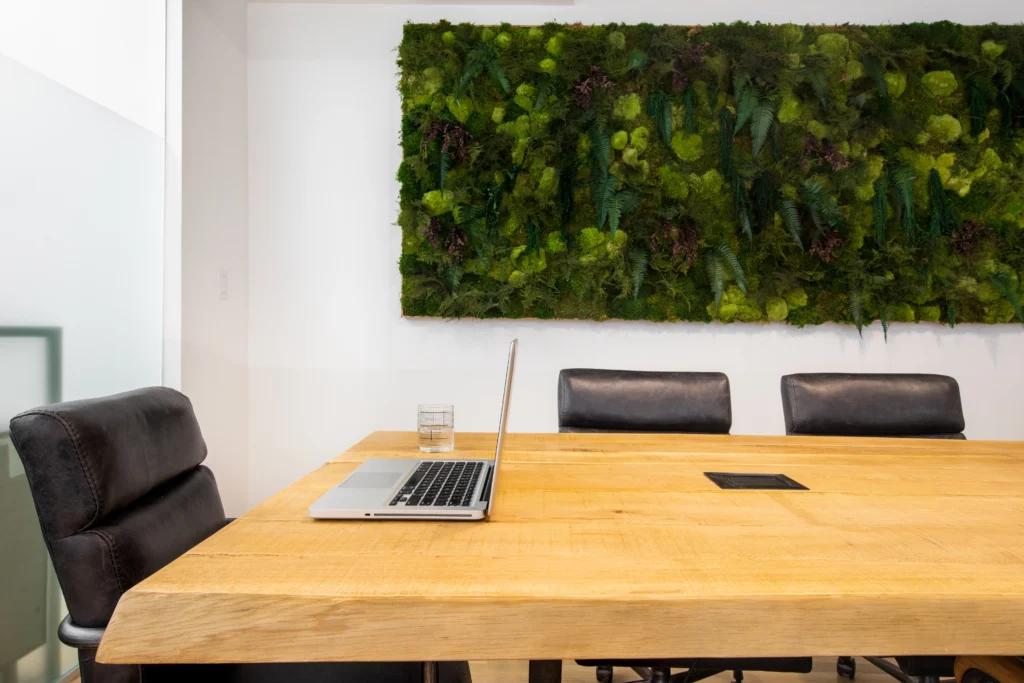
The Design In holistic interior design, we emphasize the use of biophilic elements to increase exposure to these natural patterns. Examples include:
Indoor plants or living walls
Natural materials like wood and stone
Organic patterns in textiles or wallpaper
Even small touches can trick the brain into a state of “effortless attention,” which restores mental energy.
Design by Gala Magriñá Design, Photo by Sean Smith
5. Lighting and Circadian RhythmS
Light isn’t just for seeing; it’s a drug for your brain.
The Science Our bodies run on the circadian rhythms, which is directly regulated by natural light:
Blue-rich light (prevalent in the morning and daytime) suppresses melatonin and boosts alertness and mood by increasing serotonin.
Warm, amber light (which occurs in the evening) signals the body to wind down by triggering melatonin production.
The Design Thoughtful lighting design can transform how you feel throughout the day:
Layered lighting (ambient, task, accent) creates a more natural, adaptable environment which better supports circadian rhythms.
Warm dimmable lights are ideal for evenings when it’s time to wind down.
Modern interior design uses “tunable lighting” that shifts from cool to warm throughout the day to match the sun’s color temperature and helps align your body’s internal clock, preventing the “brain fog” often caused by static office lights.
Design by Gala Magrina Design, Photo by Claire Esparros
Where Design Meets Well-Being
At the end of the day, neuroarchitecture reminds us that our spaces are never just visual, they shape how we think, feel, and move through our lives. When we begin to design with intention, honoring principles like neuroarchitecture, including biophilic elements, and using light to regulate our circadian rhythms, we create environments that don’t just look beautiful, but actively support our well-being. And that is a true luxury interior design.
Want To Receive Monthly HOlistic Interior Design Tips + Stay Up To Date On What We've Been Up To?