Hello!
I’m fresh off my bi-annual trip to Spain and as someone who is constantly exploring how our physical environments impact the way we feel, my mind was running a mile a minute.
While hanging out in everyday homes, neighborhood apartments and local cafes, I began to notice a huge difference between Spanish interior design and design in the US. Standard, non-luxury interior design in Spain feels much more elevated (and yet simpler) than it does here in the US.
Here, basic homes often default to standardized, inexpensive materials, heavy traditional furniture and layers of decorative clutter. However, in Spain, the baseline for everyday interior design is rooted in warm minimalism, organic textures, and deep intentionality. While simpler in style, it feels richer.
So this month, I’m breaking down why Spanish interiors hit so differently and how we can use those holistic design principles to make our own spaces feel more grounded, serene and effortlessly sophisticated.
You can read the full blog post here! I hope it inspires you to look at your space through a fresh and intentional lens.
Sending lots of 💛,

In Defense of Simplicity: What Spain Taught Me About Everyday Interior Design
During my most recent trip to Spain, I found myself captivated not by ultra-high-end luxury estates, but by standard, everyday apartments. There is a quiet, natural sophistication in average Spanish homes that we rarely experience in mid-tier American design.
In the US, standard homes often lean into heavy traditional aesthetics, synthetic materials and an impulse to fill every blank corner with “decor.” In contrast, Spanish interior design style approaches daily living with a fresh, modern simplicity that feels instantly calming, elevated and deeply connected to Nature.
As holistic interior designers, we always look beyond surface aesthetics to ask how an environment affects human well-being. So why does every day Spanish interior design feel so effortlessly chic and what can it teach us about creating supportive, grounding spaces?
The answers lie in material authenticity, architectural integrity, scale and a shift away from the American “bigger is better” mindset.
#1 Architectural "Bones" vs. Decorative Fixes
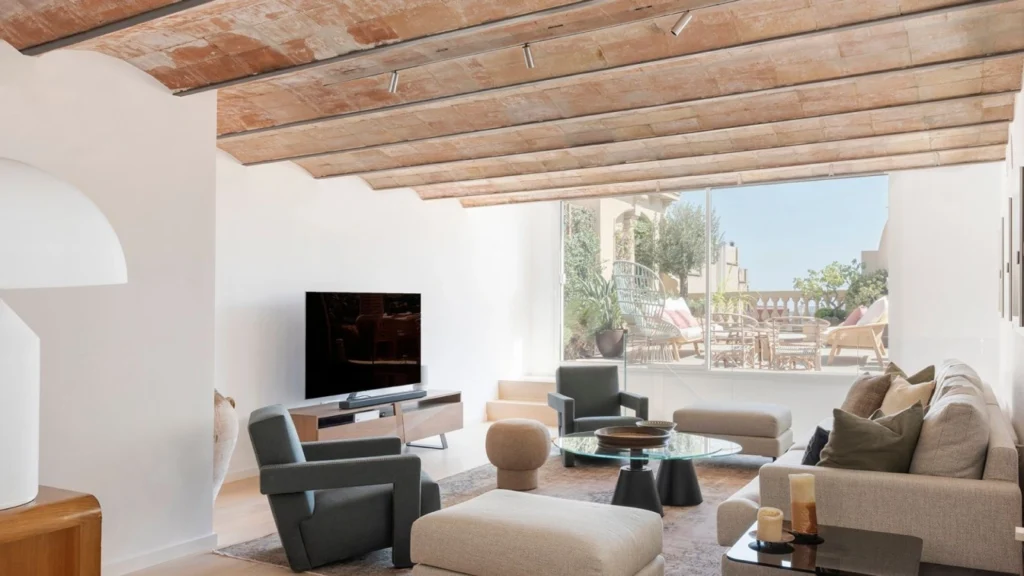
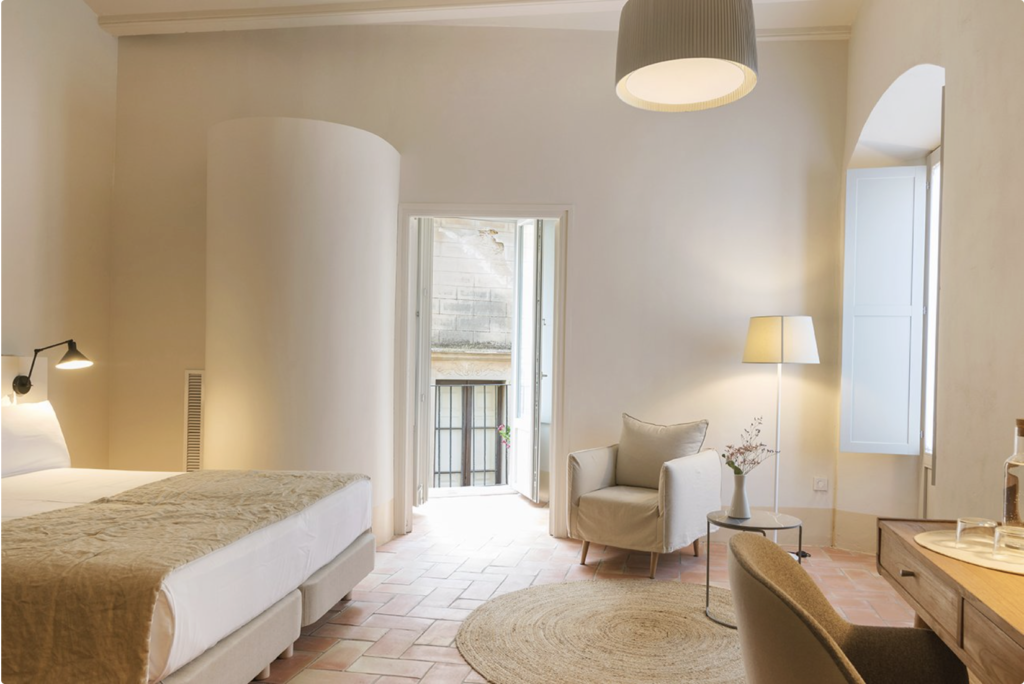
In Spain, standard homes are built with plaster, stone, masonry, and concrete. The architecture itself carries weight, history, and physical texture. High ceilings, soft archways, micro cement finishes and exposed beams mean a room already possesses character before a single piece of furniture is placed.
In contrast to Spanish interior design, standard US residential construction relies heavily on drywall, hollow doors, and wall-to-wall carpeting. Because these “drywall boxes” can feel visually flat, homeowners often compensate by over-decorating and adding heavy drapes, excess wall art and multiple layers of furniture to artificially inject warmth.
And from a holistic interior design perspective, warmth shouldn’t rely on visual clutter. When you invest in textured wall finishes such as lime wash paint, subtle plaster or warm neutral tones- a room feels complete without needing to be stuffed with objects.
#2 Authentic Biophilic Materials vs. Synthetic Finishes
In Spanish interior design, everyday design isn’t about glamour and glitz, it’s about authenticity. Standard interiors lean on terracotta, unpolished stone, raw linen, and solid wood. These natural finishes age gracefully over time and connect us back to the natural world which is a core pillar of biophilic interior design which has been proven to have a myriad of positive effects on people.
In the mid-tier US market, design is frequently dominated by synthetic materials such as luxury vinyl plank (LVP), plastic laminates and synthetic upholstery. When interior materials try to fake texture, the mind and nervous system feel the disconnect. Organic materials bring an inherent sense of grounding that faux finishes simply cannot replicate. Not to mention, they are healthier for you too 🙂.
#3 The Scale Difference: “Bigger is Better” vs. Right-Sized Living
In the US, residential design is often driven by a “bigger is better” mindset. Larger square footage, deep sectional sofas and giant kitchen islands are standard in many homes. But when a space expands, the impulse to fill it often leads to visual clutter and scale inflation, which can leave a room feeling disjointed rather than grounding.
In Spain and across Europe, space is viewed differently. Because homes and apartments are naturally more compact, design prioritizes proportion, efficiency and flow. Furniture is scaled to the human body rather than the size of a giant room. By prioritizing quality of space over sheer size, everyday European homes achieve a level of intimacy, balance and quiet elegance that larger American homes often struggle to recreate.
#4 Embracing Negative Space and Warm Minimalism
Walk into a standard American living room and you’ll often see scale inflation at play via oversized sectional sofas, giant media consoles and accent pieces crowding every corner.
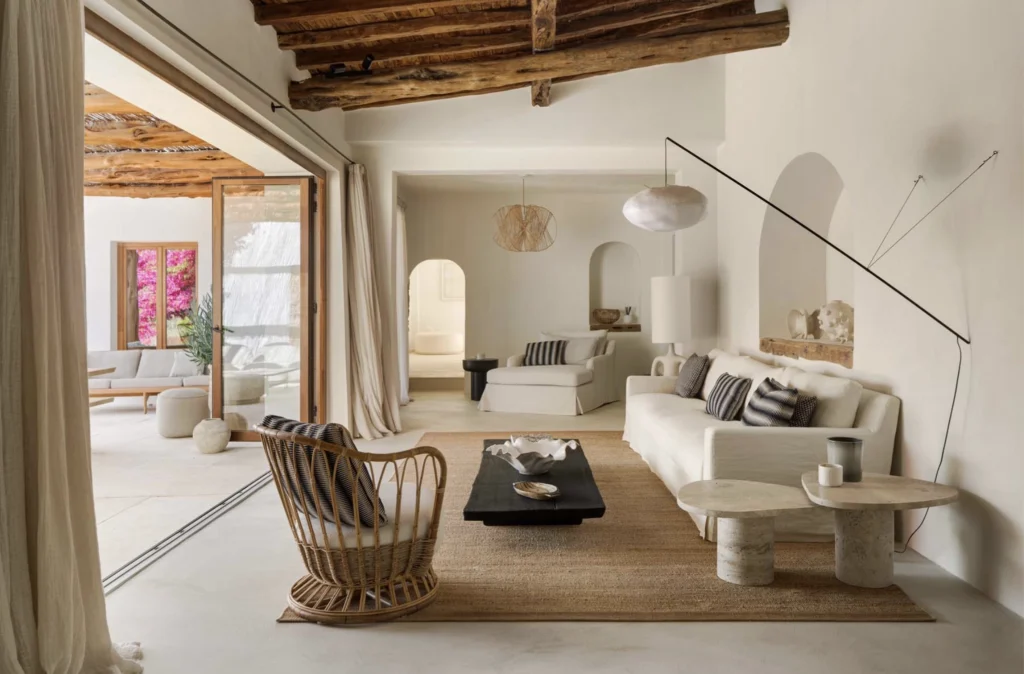
Spanish interior design embraces negative space. Spaces are planned around flow, natural light and physical breathability. Furniture is low-profile, clean-lined and functional. By leaving room for the eyes and energy to rest, the room immediately feels like a peaceful sanctuary rather than a storage unit for decor.
How to Bring "Spanish Design Style" into Your Home
You don’t need a full renovation (or an international move) to bring this clean, elevated feel into your living space. Here are three holistic design shifts you can make today:
1. Edit Down for Visual Calm
Try removing one unnecessary accent table, oversized chair or decorative object from your living room. Notice how much lighter and more peaceful the room feels when the space is given permission to exhale.
2. Choose Tactile, Natural Textiles
Swap synthetic throw blankets and polyester window coverings for unbleached linens, woven wools and matte ceramic or terracotta accents. Authentic and natural textures instantly ground a room’s energy.
3. Maximize Light and Shadow
Keep window treatments light, sheer, and airy to allow natural sunlight to move across your walls throughout the day. Connecting your interior with natural light cycles supports your circadian rhythm and strengthens your bond with the outdoors.
Designing with Intentionality
At its core, elevated interior design isn’t about spending a fortune, it’s about intentionality. It’s about stepping away from fast-decor trends and creating a home that calms your nervous system, honors natural materials and supports how you truly want to live.
Interested in creating a supportive, calm environment in your own home? Explore our holistic interior design services or read our guide on how neutrals create sanctuary in modern spaces.