Hello!
A couple of weeks ago, I was deep in a massive pitch for a holistic office design project. This business owner didn’t just want a “refresh”—they specifically came to us for our holistic approach.
Now, I’m always thrilled when a leader sees the value in investing in a supportive space for their team. But what made this project different? It’s for an industrial manufacturer. We’re talking factories, heavy machinery—quite honestly, the last place you’d expect to find a focus on biophilia and wellness.
I’ve spent the last few weeks pulling the latest “receipts”—studies that prove how well-designed spaces don’t just look good, they can actually help improve the bottom line. What’s wild to me is that the science is inarguable, yet so many offices still look… well, like shit.
I’m tired of seeing people struggle in spaces that work against them. Science has the answers—let’s make it make sense.
Check out the data that’s changing the game. And let me know – does your current office ‘make it make sense,’ or is it holding you back? Reply to this email and tell me the one thing about your workspace that drives you crazy—I’d love to hear what you’re dealing with.
Sending you lots of 💛,

The Three Elements That Make a Better Office
When we talk about holistic office design, we’re not talking about trends or aesthetics.
We’re talking about designing environments that support how humans actually function: physically, psychologically, and socially.
Over and over, the research points to three core design elements that have the biggest impact on employee wellbeing and performance:
- Biophilia (nature)
- Natural light
- Spaces for connection and collaboration
Let’s break down what the science says.
1. Biophilia: Humans Are Wired for Nature
Biophilic design is based on a simple truth: humans evolved in nature, not cubicles.
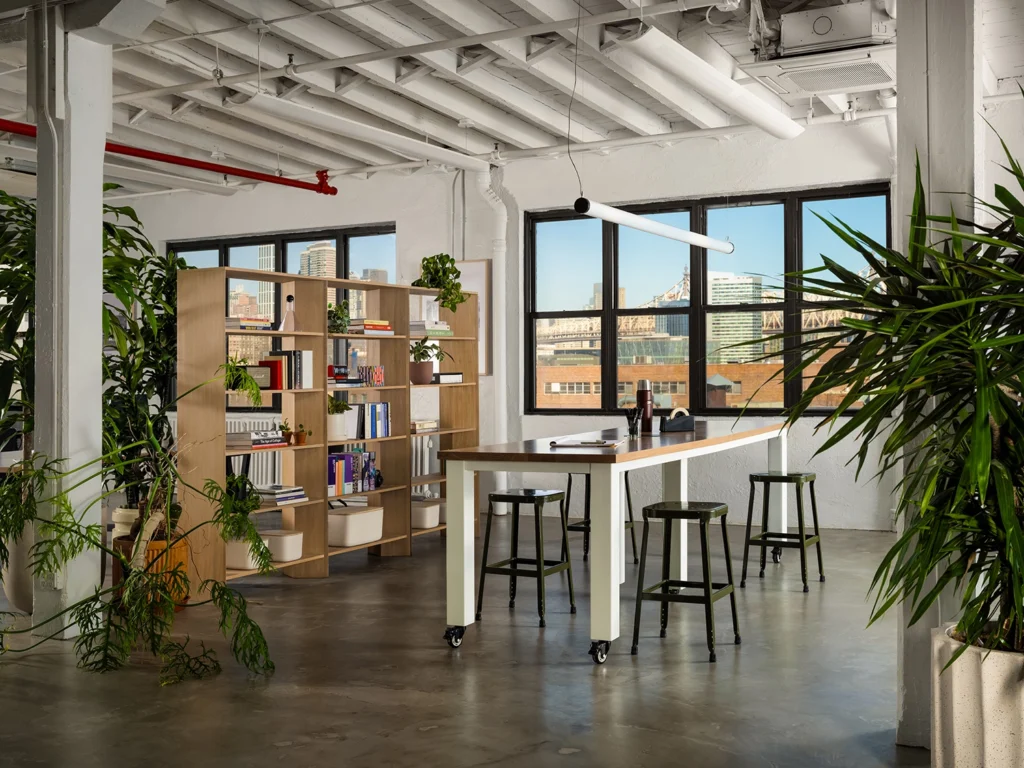
When natural elements are integrated into workplaces (plants, natural materials, views of greenery, organic shapes) the impact is measurable.
Research shows that offices with biophilic elements can increase productivity by up to 15%, while also improving creativity and overall wellbeing.
Studies also show that exposure to nature in the workplace correlates with higher job satisfaction, engagement, and overall employee wellbeing.
Even simple additions—plants, natural materials, or views of outdoor landscapes—can improve concentration and reduce stress levels.
How do we apply this in practice?
In our holistic office design projects, biophilia shows up in multiple ways:
- Natural materials and textures
- Strategic plant installations
- Organic shapes and calming color palettes
- Visual access to daylight and outdoor views
- Art that features nature or natural landscapes
The goal isn’t to turn the office into a jungle. It’s to create subtle cues that reconnect people to the natural environment their brains evolved to respond to.
The results are powerful: calmer employees, improved focus, and more creative problem solving.
2. Light: The Most Underrated Productivity Tool
Lighting is one of the most overlooked elements of workplace design, and it’s something we notice the minute we walk into a space.
Natural light regulates our circadian rhythms, which control sleep cycles, alertness, and cognitive performance. When employees lack access to daylight, fatigue, headaches, and reduced concentration often follow.
Research consistently shows that access to daylight dramatically improves workplace health and performance. For example:
- Workers exposed to natural daylight report significantly fewer headaches and eyestrain.
- Daylight exposure improves sleep quality and overall wellbeing.
- Productivity increases in workplaces with better daylight access.
Another study using neurological measurements found that different daylight levels directly influence cognitive engagement and emotional responses within office environments.
In holistic interior design, lighting is layered intentionally:
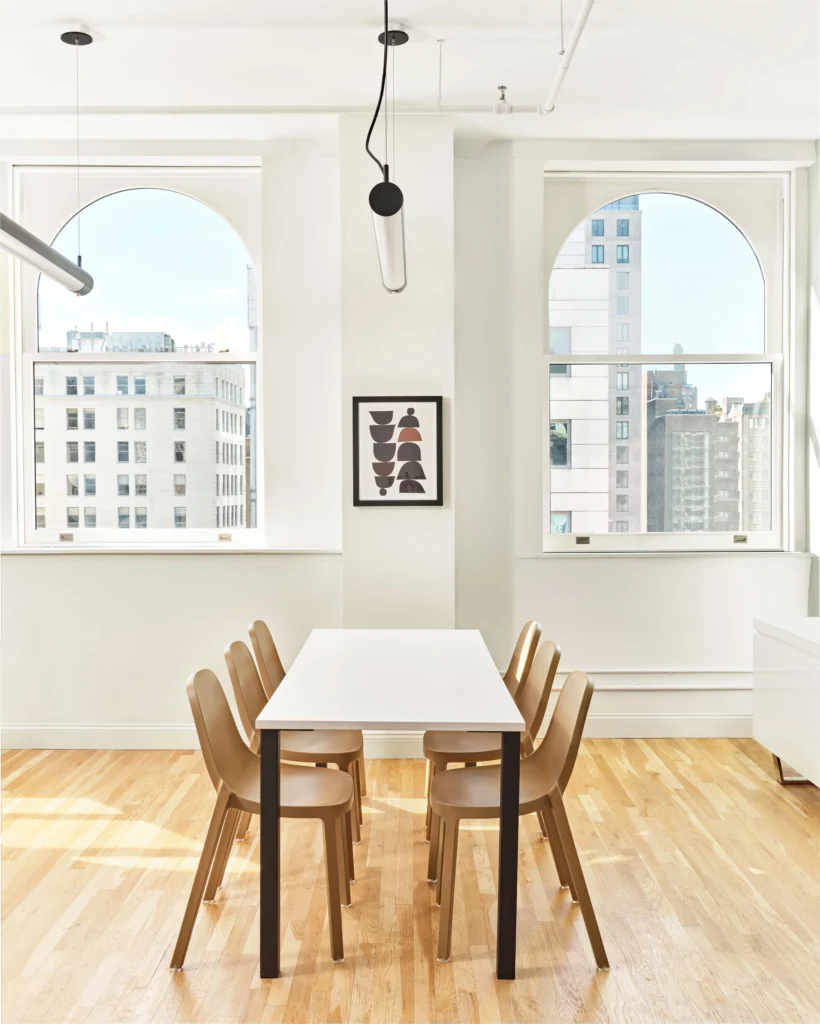
- Maximizing natural daylight
- Designing layouts that keep workstations near windows
- Using appropriate lighting temperatures when selecting bulbs
- Reducing harsh overhead lighting (like the florescent ballasts found in typical offices) and introducing a variety of light sources (think task lamps, floor lamps, etc.)
Light affects everything from mood to metabolic health. Intentional lighting as a component in holistic office design can completely transform how a space feels.
3. Spaces for Connection: Humans Are Social Creatures
Work isn’t just about completing tasks. It’s also about collaboration, creativity, and problem solving. Yet many offices still prioritize maximizing number of desks over human interaction.
Research on workplace environments consistently shows that environments designed for collaboration strengthen team culture, reduce stress, and improve engagement.
Employees are also more productive when they have a variety of spaces that support different work styles, including areas for quiet focus, informal conversations, and group collaboration.
In many of our office projects, we organize workplace layout to support connection.
That might include:
- Lounge seating for casual conversations
- Café-style gathering areas to share a coffee or have a more casual meeting
- Flexible meeting zones to support company wide meetings as well as smaller breakout areas
- Quiet spaces like meeting rooms or booths for private conversations
These environments encourage the kind of spontaneous interactions that help people feel more connected.
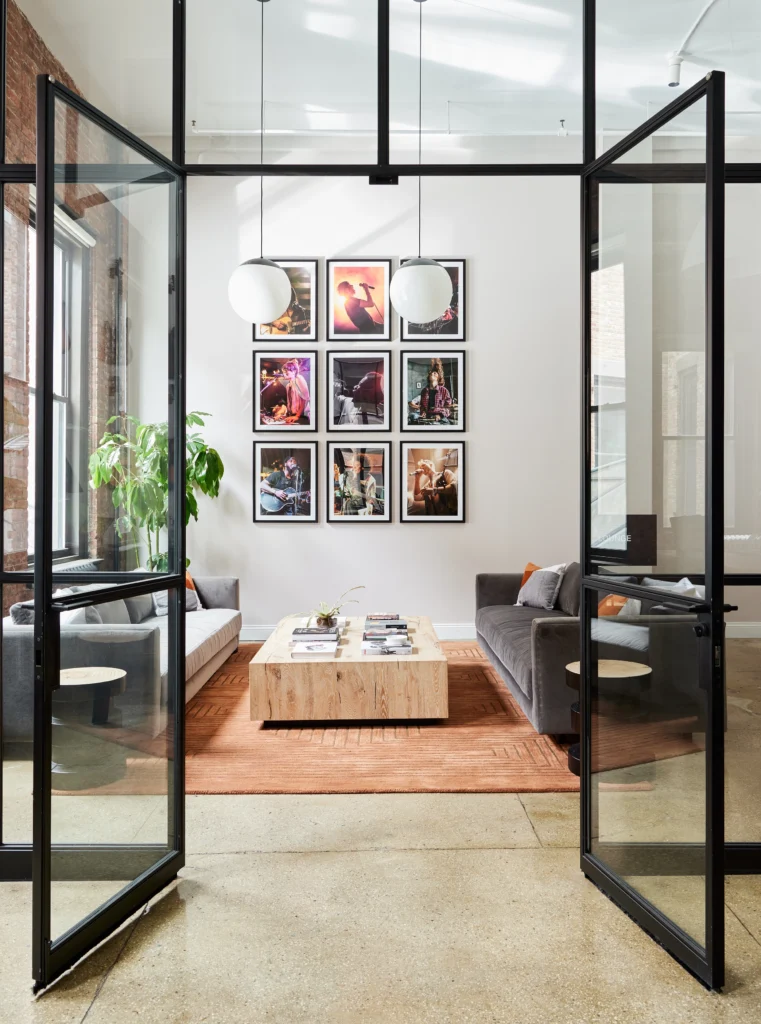
Why Holistic Office Design Is a Business Strategy
When businesses invest in better environments, they’re not just investing in aesthetics, they’re investing in their employees.
Holistically designed workplaces have been linked to:
- Higher productivity
- Lower absenteeism
- Better mental wellbeing
- Increased employee satisfaction
- Stronger workplace culture
Not to mention that in today’s competitive hiring landscape, the workplace environment itself has become a recruiting tool. People want to work in spaces that support them, not spaces that drain them.
When you create an environment that supports your employees, the entire company benefits.
If you’re curious about what’s possible for your workplace, I’d love to hear from you.
What’s the one thing about your office that drives you crazy?
Is it the lighting? The layout? The noise?
Reach out and let’s figure out how to create a space that nurtures your business.